















There’s that moment that seems to come out of nowhere during wedding planning when the reality of it hits you:
Oh.
I’m not just planning a wedding.
I’m also managing grief like it’s a part-time unpaid internship.
And somehow, no one put that on the bridal checklist.
You’re picking linens.
Choosing songs.
Trying to decide if ivory and champagne are different colors or if the wedding industry is just gaslighting all of us.
Meanwhile, quietly in the background:
you miss your dad.
Sometimes loudly.
Sometimes in sneaky little moments.
Like hearing someone mention the father-daughter dance.
Or filling out the “who walks the bride down the aisle” section.
Or standing in a fitting room thinking,
...he was supposed to be here for this.
And one of the hardest parts?
Trying to explain that grief to your fiancé.
Because from the outside, it can look confusing.
You’re excited.
You’re happy.
You’re in love.
And also, you cried in the car because a man at Home Depot laughed like your dad.
Very normal.
Totally fine.
Definitely not emotionally unwell.
The truth is, grief during engagement is often invisible.
And if your fiancé hasn’t lived your exact loss, it can feel impossible to explain why certain moments hit like a freight train wearing a tuxedo.
But this conversation matters.
Because your partner doesn’t need to become your grief translator.
They just need to understand enough to stand beside you in it.
As we say often at Gutsy Goodness: grief doesn’t cancel joy.
Your love can hold both.
Let’s talk about how.

Why This Conversation Feels So Hard
Sometimes brides avoid this conversation because they think:
“I don’t want to make this engagement sad.”
Or:
“He already knows I miss my dad. Why do I need to explain it?”
Or my personal favorite:
“I have cried over centerpieces this week and would prefer not to unpack what that has to do with all my emotions about missing him.”
Fair.
But here’s the thing:
Your fiancé may know that you’re grieving.
That doesn’t mean they understand how grief shows up.
They may not realize:
- why dress shopping felt heavier than expected
- why the father-daughter dance topic makes you suddenly need to reorganize your spice cabinet instead
- why hearing “this is the happiest time of your life” makes you want to start scratching anyone off the guest list who says something stupid.
Grief isn’t always obvious.
Sometimes it shows up in ways that don’t make sense—even to you.
Sometimes it looks like silence.
Sometimes it looks like irritability.
Sometimes it looks like you snapping because he asked one innocent question about if there will be time in the schedule for the groomsmen to golf before the rehearsal.
It’s not about golfing.
It was never about golfing.
What Brides Wish Their Fiancés Understood
Let me save you some emotional labor.
Here’s what many grieving brides are actually trying to say:
I’m not upset with you. I’m overwhelmed by missing him.
I’m not trying to ruin this season. I’m trying to survive it with both joy and grief in the same room.
Yes, you're the most important man in my life and I love you. I also want my Daddy.
I don’t need you to fix it. I need you to not be afraid of it.
That last one?
That’s the big one.
Because a lot of partners panic around grief.
They want solutions.
They want to make it better.
They want to say the perfect thing.
And grief is rude because sometimes the perfect thing is just:
“I know. I’m here.”
Not advice.
Not silver linings.
Not “at least…”
Please.
No “at least.”
If someone says,
“At least he would want you to be happy...”
"At least you've had time to process..."
I will personally come remove their speaking privileges.
Sometimes support sounds like:
“This sucks. I know you miss him.”
That’s it.
That’s the gold medal answer.

How to Start the Conversation Without Making It Feel Like a TED Talk
You do not need a perfect script.
You do not need candles, a PowerPoint, or an emotional soundtrack by Adele.
You just need honesty.
Try something simple like:
“I’ve been realizing how much missing my dad is showing up during wedding planning, and I don’t think I’ve fully explained that to you.”
Or:
“There are parts of this season that feel heavier than I expected, and I want you in that with me.”
Or:
“I know I’ve been weirdly emotional about things that make no sense. Unfortunately, they make perfect sense in my brain. Can we talk about it?”
Gentle.
Human.
No emotional hostage situation required.
The goal is not perfection.
The goal is connection.
Chapter 2 in A Bride’s Guide to Wedding Day Memorials and Emotional Survival says it best—this isn’t about décor or logistics. It’s about shared language for loss and love.
Grief Looks Different on Everyone
This part matters.
Because sometimes your fiancé isn’t responding the way you expected and suddenly you’re wondering:
“Do they even get it?”
Maybe.
Maybe not.
But also—maybe they grieve differently.
Some people cry.
Some people get quiet.
Some people make dark jokes that are either concerning or hilarious depending on the day.
Some people go full task mode and suddenly become emotionally unavailable but excellent at comparing catering quotes.
Grief is weird like that.
- Your upbringing matters.
- Your culture matters.
- Your family history matters.
- Trauma matters.
- Faith matters.
Some people were raised in homes where grief was discussed openly.
Some were raised with:
“Be strong.”
“Don’t cry.”
“We don’t talk about that.”
So when your fiancé seems emotionally allergic to the conversation, pause before assuming they don’t care.
Sometimes they care deeply.
They just never learned how to sit inside sadness without trying to escape through practical solutions and snack distribution.
Honestly?
Relatable.
How to Share Your Emotional Triggers
This is where things get helpful.
Because your fiancé cannot support what they cannot see.
You may need to say:
“The father-daughter dance conversation is hard for me.”
“Dress shopping brings up a lot.”
“I need you to know if I get quiet during planning, it’s usually grief—not me being mad at you.”
“The aisle walk is the part I’m most afraid of.”
For many brides, that moment carries more emotion than anything else in the day.
This is not being dramatic.
This is giving your partner a map.
Without it, they’re just emotionally wandering around IKEA with no arrows and no meatballs.
Help them help you.
Tell them:
- what hurts
- what helps
- what absolutely does not help
(Again: no “at least.” We ride at dawn against “at least.”)

Creating Support Instead of Silence
Silence creates weird stories.
You think:
“He doesn’t care.”
He thinks:
“She doesn’t want to talk about it.”
Meanwhile both of you are just emotionally parallel parking badly.
Support gets built in small ways.
Maybe that looks like:
- checking in before dress appointments (because those are... emotional)
- choosing a bouquet charm together
- talking through who walks you down the aisle
- creating a private pre-wedding ritual to honor your dad
- deciding together whether a public tribute feels healing or overwhelming
One of the best tools from the book A Bride’s Guide to Wedding Day Memorials and Emotional Survival is simply comparing what feels comforting versus what feels performative.
Because peace matters more than performance.
Your wedding does not need the most dramatic tribute.
It needs the most honest one.
When Your Partner Says the Wrong Thing
They probably will.
Because they are human.
And humans are often deeply committed to saying weird things under emotional pressure.
Grace helps here.
Correct gently.
Try:
“I know you’re trying to help, but what I really need is just for you to sit with me in it.”
Or:
“I don’t need this solved. I just need it seen.”
Or:
“Thank you, but if one more person says ‘everything happens for a reason,’ I will be entering my villain era.”
Communication.
Romance.
Personal growth.
You Don’t Have to Feel the Same at the Same Time
This is important.
You might cry over bouquet ribbons.
He might not crack until the wedding playlist hits one specific song.
You might want a visible tribute.
He may prefer something quiet and private.
That is not failure.
That is two humans loving differently.
Couple Goals do notinclude matching reactions.
It’s understanding. Not agreement.
You do not have to cry in unison.
You just have to care in the same direction.
And most of the time?
You already do.

Final Truth: Let Him Into the Missing
Your fiancé is not replacing your dad.
And this conversation is not about asking them to.
It’s about letting them understand the shape of your grief so they can love you inside it.
Because marriage isn’t just sharing joy.
It’s sharing the invisible things, too.
The ache.
The fear.
The moments you smile at your engagement ring and cry five minutes later because your dad never got to see it.
That matters.
Let him into that.
Not because it makes grief smaller.
But because love feels less lonely when someone is willing to hold it with you.
And that?
That’s the beginning of a very good marriage.
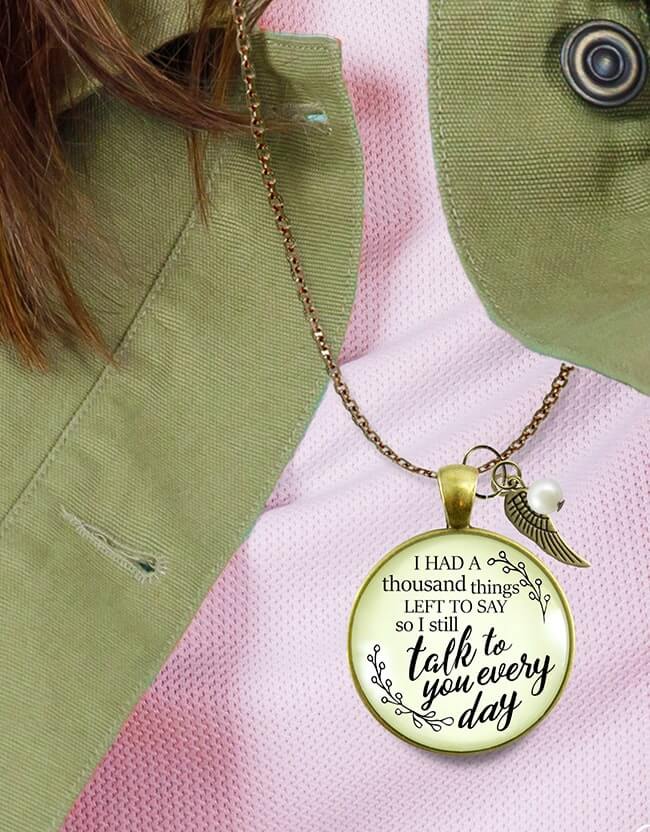
Use a Keepsake Gift to Help Your Fiancé Understand Your Father’s Presence
Sometimes words are hard.
Sometimes a keepsake says it better.
A memorial bouquet charm, photo keepsake, or meaningful wedding-day tribute can help your fiancé understand that this isn’t about sadness taking over your wedding.
It’s about love still having a place there.
A quiet reminder.
A shared understanding.
A way to say:
He’s still part of this day.
Browse meaningful keepsake gifts created for brides carrying both joy and grief.
Because grief doesn’t cancel joy.
And your love can hold both.