













 There should be a bridal registry category called:
Things People Need to Stop Asking Me Immediately.
Right next to towels and air fryers.
Because if you are planning a wedding after losing your dad, there is one thing that happens over and over and over again:
People ask.
Sometimes sweetly.
Sometimes casually.
Sometimes with the emotional awareness of a decorative pillow.
Questions like:
“Who’s walking you down the aisle?”
“Is your dad giving a speech?”
“What song are you doing for your father-daughter dance?”
“Your dad must be so excited!”
And suddenly you are standing in a bridal boutique holding tulle and trying not to cry in front of a woman named Madison who just asked if your father will be helping with the tux fitting for the groomsmen.
Madison.
Read the room.
The hardest part?
Most people are not trying to be hurtful.
They are being normal.
And your grief is what makes normal questions feel like emotional sniper fire.
Which somehow makes it worse.
Because now you feel sad…
and awkward…
and guilty for making them uncomfortable…
while also wanting to disappear into a rack of satin gowns.
Very glamorous.
Very bridal.
Very not in the brochure.
Chapter 2 of Lisa's book A Bride’s Guide to Wedding Day Memorials and Emotional Survival talks about this emotional exhaustion—how grieving brides often feel forced into constant micro-explanations of loss during what should be joyful conversations.
Exactly.
It’s exhausting.
Because you should not have to perform your grief for polite conversation.
Let’s talk about that.

Why These Questions Hit So Hard
Because they are rarely just questions.
They are reminders.
Tiny emotional trapdoors hidden inside normal conversation.
Your standing at Sephora picking out a new lipstick and somehow a quick conversation with the woman next to you looking for a new gloss turns into...
“Who’s walking you down the aisle?”
She didn't realize it was a personal therapy session, not a preference.
Because what you hear is:
Your dad should be here.
“Are you doing a father-daughter dance?”
sounds like wedding planning.
But what you feel is:
There is a whole memory I never get to have.
That is why the tears show up so fast.
It is not because you are too sensitive.
It is because grief translates ordinary questions into loss.
And wedding plannings days are full of ordinary questions.
Vendor Questions Can Feel Like Emotional Ambushes
Honestly, wedding vendors deserve their own training module.
Because somewhere between “What flowers do you want?” and “What time should hair and makeup start?” comes:
“So tell me about your dad!”
Excuse me, I was just trying to discuss peonies.
Bridal shops.
Photographers.
DJs.
Officiants.
Planners.
They ask because they are building your day.
But sometimes it feels like every consultation comes with an unexpected grief pop quiz.
Especially:
- dress appointments
- father-daughter dance conversations
- ceremony timeline planning
- invitation wording
- rehearsal dinner speeches
One bride said the hardest moment was a consultant asking,
“Who will be helping you button your dress?”
because the answer wasn’t logistical.
It was grief.
Sometimes it’s never about the zipper.

Family Assumptions Make It Weird Fast
Families love assumptions.
They also love saying things like:
“Well of course we’ll reserve a chair for Dad.”
Will we, Susan?
Will we?
Sometimes people assume your grief should look a certain way.
A memorial table.
A public tribute.
A slideshow set to acoustic Coldplay.
Sometimes they assume your dad’s role gets automatically reassigned.
“Your uncle can walk you.”
“Your brother should do the dance.”
“Your stepdad can just step in.”
Can he though?
Because replacing a person and honoring a person are not the same thing.
Family assumptions can feel painful because they skip over the emotional part and rush straight to solutions.
Sometimes you need acknowledgment before logistics.
Actually, usually.
The “Since Your Dad is Gone Who’s Walking You Down the Aisle?” Question
Ah yes.
The final boss.
This question alone has launched approximately 700 bathroom crying sessions.
Because people ask it like it’s casual.
Like they’re asking what flavor cake you picked.
Meanwhile your internal response is:
I don’t know, Janet, probably emotional damage and a box of tissues. Happy now?
This question hurts because it touches identity.
Protection.
Tradition.
Missing.
Love.
It is never just about the aisle.
It is about the version of the day you thought you’d have.
And sometimes you still do not know the answer.
That’s okay too.
How to Answer Without Crying in Public
Let me give you the permission no one gives:
You do not owe everyone the full story.
Not the florist.
Not your coworker.
Not the woman steaming your dress.
You are allowed short answers.
Simple answers.
Boundary answers.
Things like:
“My dad passed, so we’re doing something a little different.”
“He’s no longer with us, so we’re still deciding what feels right.”
“We’re keeping that part private, but thank you for asking.”
“Wedding planning grief is fun and surprising, isn’t it?”
Okay maybe not that last one.
But tempting.
The goal is not emotional performance.
The goal is preserving your nervous system.
Short is allowed.
Kind is enough.

You Do Not Have to Comfort the Person Asking
This one matters.
Because sometimes when you answer honestly, the other person gets uncomfortable.
And suddenly you feel responsible for making them feel better.
Absolutely not.
You do not need to say:
“It’s okay!”
when it isn’t.
You do not need to manage their awkwardness like an unpaid emotional event coordinator.
You are allowed to let silence exist.
You are allowed to let truth be uncomfortable.
That discomfort belongs to reality.
Not your failure.
Boundaries with Strangers Are Holy
Not everyone deserves access to your grief.
Read that again.
Some people are safe.
Some people are curious.
Those are not the same thing.
You can decide:
who gets the full story
who gets the short version
who gets absolutely nothing but polite eye contact
That is not cold.
That is emotional stewardship.
Chapter 2 of A Bride’s Guide to Wedding Day Memorials and Emotional Survival emphasizes that protecting emotional bandwidth during wedding planning is not selfish—it is survival.
Exactly.
Boundaries are not walls.
They are doors with locks.
What to Say When You’re Caught Off Guard
Because sometimes you are not prepared.
Sometimes someone asks in the middle of Sephora and now your concealer aisle has become a grief seminar.
If you freeze, try:
“That’s actually a tender topic for me, so I’m still figuring it out.”
Or:
“My dad passed, and some parts of planning have been heavier than expected.”
Or simply:
“He’s not here, but I’m finding meaningful ways to honor him.”
That’s enough.
You do not need the perfect sentence.
You need one sentence you can survive.
When the Question Comes from Someone You Love
This gets harder.
Because strangers are one thing.
But when your fiancé, your mom, or your best friend asks something painful, the goal shifts.
Less boundary.
More honesty.
Try:
“That question is hard because it reminds me of what I’m missing.”
Or:
“I know you mean well, but I need you to understand this isn’t just logistics for me.”
People who love you can handle truth.
Let them.

Final Truth: You Are Not Bad at Grief
If these questions make you angry…
if they make you cry…
if they make you want to fake your own disappearance and get married in Iceland…
you are not dramatic.
You are grieving.
And grief is exhausting when it keeps getting invited into small talk.
You are not bad at this.
You are carrying something heavy in places designed for light conversation.
That matters.
You Are Allowed to Protect Your Peace and Keep Your Answers Short
Let this be your permission slip:
You do not owe your grief to polite conversation.
You do not owe strangers a vulnerable performance.
You do not owe vendors your emotional backstory.
You do not owe every well-meaning question a full explanation.
You are allowed peace.
You are allowed boundaries.
You are allowed to answer briefly and walk away.
Because grief is personal.
And love does not need an audience to be real.
Protect your peace.
Keep your answers short.
And if necessary—
blame the florist and go cry in the parking lot like the rest of us.

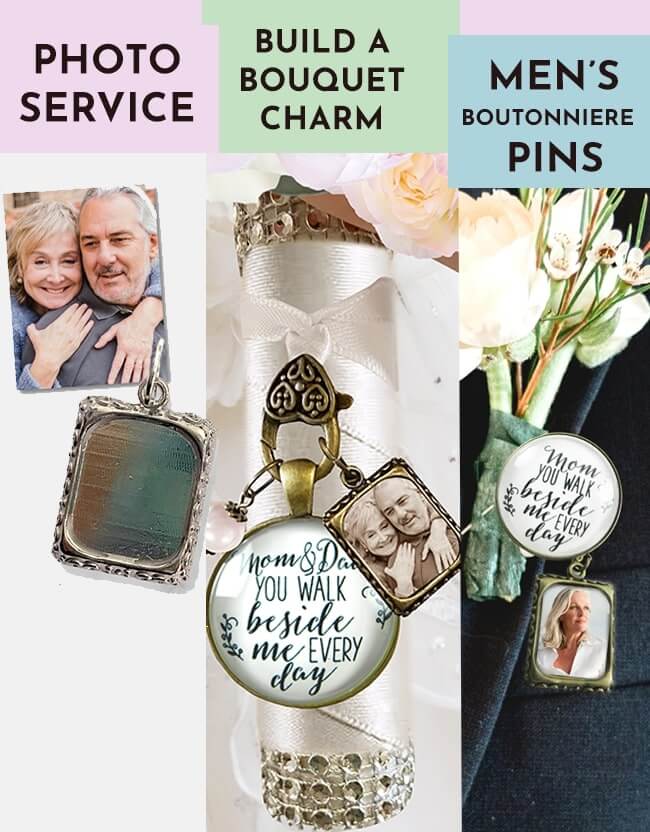
Lisa Copen is the co-owner of Gutsy Goodness and creator of Build a Bouquet Charm, where she helps brides make the bittersweet a little easier when their dad is no longer there to share in their wedding day. Through her book, A Bride’s Guide to Wedding Day Memorials and Emotional Survival , wedding resources, and deeply personal designs, she offers ways to honor a father’s memory while still embracing joy, love, and the meaning of the moment. Get our free Bride's Wedding Memorial and Support Toolkit.