













 There is a very specific kind of panic that happens when someone says:
“So , do you need a photo of Uncle Bob for the memorial table at your wedding?”
And your immediate internal response is:
Absolutely no, Brenda.
But instead, because you were raised with manners and mild emotional suppression, you smile politely and say:
“Oh… we’re still figuring that out.”
Meanwhile, your nervous system has left the building.
If you’ve lost your dad and you’re planning your wedding, chances are someone—your mom, your aunt, your future mother-in-law, that one family friend who behaves like an unpaid grief consultant—has suggested a memorial table.
Photos.
Candles.
A framed poem.
Maybe a sign with calligraphy and enough emotional pressure to knock over the cake table.
And maybe for some brides, that feels beautiful.
But for you?
It feels like setting up your own emotional crime scene next to the guest book.
You don’t want it.
And then comes the guilt.
Does that make me selfish?
Am I doing grief wrong?
Does not wanting a memorial table mean I’m a terrible daughter?
Let me save you years of emotional overthinking:
No.
Absolutely not.
Chapter 1 of A Bride’s Guide to Wedding Day Memorials and Emotional Survival makes this clear: public tribute, private remembrance, or no visible memorial at all are all valid choices. What matters most is peace—not performance.
Let’s say that louder for the people decorating your grief without permission:
Love does not require a display.
Let’s talk about it.

Why Memorial Tables Feel Like the “Expected” Choice
Memorial tables have become wedding gospel.
Somewhere between Pinterest and Aunt Carol’s opinions, they became the thing people assume you’re supposed to do.
A framed photo.
A candle.
A sign that says “We know you’d be here today if heaven weren’t so far away.”
Cue everyone crying near the dessert table.
And look—sometimes that is beautiful.
Sometimes it feels healing.
Sometimes families genuinely find comfort in shared public remembrance.
But sometimes?
It feels like turning your grief into décor.
And that’s where things get complicated.
Because what if your sadness is sacred?
What if you do not want it displayed between the seating chart and the guestbook like an emotional centerpiece sponsored by Hobby Lobby?
That does not make you cold.
It makes you honest.

Private Grief Is Still Real
This part matters most.
A lot of brides quietly believe:
If I don’t make it visible enough, maybe people will think I didn’t love him enough.
Nope.
Love is not measured in candles.
Or framed poems.
Or how many guests stop and tear up by table seven.
Your grief is real even if no one sees it.
Especially then.
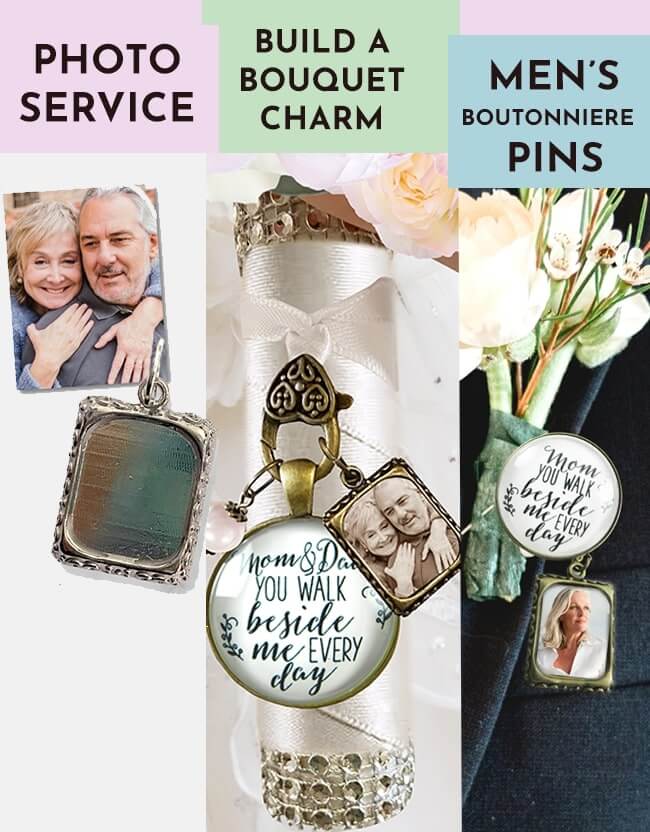
Chapter 1 of Lisa's book calls this the “private moment” path—grief that is tender, personal, and carried quietly. Things like a bouquet charm, a sewn-in handkerchief, or simply whispering his name before walking down the aisle.
That counts.
Actually, sometimes that matters more.
Because remembrance does not have to be public to be powerful.
Sometimes the holiest things happen where no one claps.
Family Expectations Can Make This Weird Fast
Ah yes.
The family conversation.
Also known as:
How to lovingly tell your relatives they cannot run your grief like a group project.
Often, family members push for a memorial table because they are grieving too.
- Your mom may want visible remembrance.
- Your grandmother may feel like not doing something public means forgetting him.
- Your aunt may be emotionally attached to the framed photo from 1998 and now we all have a situation.
This is not always control.
Sometimes it is love wearing orthopedic sandals.
Still:
their grief is not your wedding plan.
You are allowed to protect your peace.
Even if that disappoints people.
Especially then.

How to Have That Conversation Without Starting Thanksgiving Drama
You do not need a courtroom defense.
You need calm clarity.
Try saying:
“I know the memorial table feels meaningful, and I understand why. For me, I think something private would feel more peaceful.”
Or:
“I want to honor Dad, but I don’t want my grief to feel like a public display.”
Or:
“I promise choosing something smaller does not mean I love him less.”
Because it doesn’t.
You are not rejecting him.
You are choosing what feels survivable.
There is a difference.
And honestly, if someone still pushes after that, they lose speaking privileges until cake cutting.
The Pressure to “Do Enough”
This is where grief gets sneaky.
Because suddenly your brain starts bargaining.
Maybe if I create the perfect tribute…
maybe if I reserve the chair…
maybe if I make the memorial table beautiful enough…
then maybe I won’t feel so guilty.
Chapter 3 calls this grief bargaining—the stage where you start trying to “earn” peace through perfect tribute planning.
Spoiler:
you cannot.
Because grief is not a loyalty test.
There is no gold medal for “Most Beautiful Public Sadness.”
Your dad does not need proof.
He knew.
Love is not measured in centerpiece height.
Alternatives If You Want Something Smaller
Not wanting a memorial table does not mean doing nothing.
It means choosing differently.
Private or subtle remembrance can look like:
- a bouquet charm with his photo
- wrapping your bouquet with his tie
- wearing his watch or handkerchief
- a private letter written the night before
- a reserved chair without signage
- a special song during getting ready
- a favorite dessert or signature drink in his honor
- a note inside your vow book
- a piece of fabric from his shirt sewn into your dress
- simply taking one quiet breath and saying: Walk with me today.
Sometimes remembrance whispers.
That is still love.
Protecting Your Emotional Bandwidth Matters
Let’s be honest:
Weddings are already a lot.
You are managing vendors, budgets, family politics, and at least one person who suddenly thinks your wedding is their personal creative project.
Adding a memorial table you do not even want?
That is emotional CrossFit.
If the idea makes your chest tighten instead of soften…
if you already know you’ll spend the whole reception staring at it trying not to unravel…
if it feels like pressure instead of peace…
please hear me:
You do not have to do it.
Your emotional bandwidth matters.
Protecting it is not selfish.
It is wisdom.

You Are Allowed to Choose Joy
Some brides feel guilty for this.
Like if they are not visibly grieving enough, they are somehow betraying their dad.
But your wedding is not supposed to become a shrine to sadness.
Your dad would not want that.
He would want joy.
Probably snacks.
Definitely fewer seating chart arguments.
Celebrating your marriage does not mean you have forgotten him.
It means love kept moving.
That is beautiful.
Not disloyal.
Final Truth: You Are Not a Bad Daughter
You are not a bad daughter because you do not want a memorial table.
You are not failing grief.
You are not dishonoring your father.
You are not selfish for wanting peace.
You are a bride trying to hold joy and sorrow in the same hands.
That is enough.
Sometimes love looks like a giant tribute table.
Sometimes it looks like a tiny bouquet charm.
Sometimes it looks like nothing anyone else can see.
And sometimes?
It looks like choosing not to turn your grief into wedding décor.
That counts.
Actually, sometimes that matters most.
You Do Not Need a Centerpiece to Prove Your Grief
If you needed permission, here it is:
You do not need the memorial table.
You do not need the framed poem.
You do not need the dramatic candle display.
You do not need public proof of private love.
You need peace.
Choose what helps you breathe.
Choose what feels true.
Choose remembrance that feels like connection—not obligation.
Because love does not require a display.
And your father does not need a centerpiece to know he mattered.

Lisa Copen is a longtime advocate for those navigating grief and the co-owner of Gutsy Goodness, a brand known for its heartfelt wedding keepsakes like Build a Bouquet Charm. Through her book, A Bride’s Guide to Wedding Day Memorials and Emotional Survival, custom jewelry designs, and wedding planning GPT tools, she supports brides who are missing their dad—helping them carry both love and loss with intention on their wedding day. Get our free Bride's Wedding Memorial and Support Toolkit.