













 You've seen it on TikTok and Pinterest. The empty seat. And you quickly scroll by, not quite ready to go there yet.
But then in the middle of standing at Michaels craft store with your maid of honor, a cart full of silk flowers and sweatshirts and transfers that say BRIDE and MOH in glitter, she unknowingly matter-of-factly says the words that feel more like a quiet ambush.
“You should save a seat for your dad. ”
And suddenly the glitter isn't pretty anymore. It just makes you want to leave the full cart and quickly head to the car. Because you feel like throwing up.
Because yes.
Maybe...
Possibly...
Absolutely not.
Who knows??
Welcome to grief.

Where even chairs have emotional consequences.
If your dad has passed and you’re planning your wedding, the idea of a reserved chair can feel deeply meaningful… or like emotional sabotage with satin ribbon.
Sometimes it brings comfort.
Sometimes it feels like voluntarily scheduling your own public breakdown in front of 150 guests and your florist.
Both are valid.
And yet, everyone seems to have opinions.
- Your mom thinks it would be beautiful.
- Your aunt thinks it’s “what he would have wanted.”
- Pinterest thinks you need a calligraphy sign and a single white rose.
- Etsy would like you to order that sign handmade on a piece of vintage barnwood. And a sash.
Meanwhile, you’re just trying to figure out:
Will this actually bring me peace… or will I stare at that chair all ceremony trying not to spontaneously combust?
Excellent question.
Let’s talk about it.
Because not every tribute is healing.
And not every beautiful idea feels survivable.
As we say often at Gutsy Goodness: grief doesn’t cancel joy.
But peace should always matter more than performance.
Why Reserved Chairs Feel So Big
A reserved chair sounds simple.
It is, technically, a chair.
But emotionally?
- It’s a whole TED Talk.
- It's Brené Brown keynote address.
- It's a Mel Robbins podcast with a "let them" lesson.
Because that empty seat represents more than absence.
It represents:
- the walk down the aisle you imagined
- the father-daughter dance that won’t happen
- the “you look beautiful” moment you thought you’d have
- the version of your wedding day that existed before grief rewrote the script
That’s a lot for one folding chair.
Reserved chairs become symbolic because weddings are symbolic.
And when someone important is missing, we start looking for physical ways to say:
They mattered.
They should be here.
I still love them.
That instinct is real.
But symbolism should serve you.
Not emotionally tackle you in formalwear.

When a Reserved Chair Helps
For some brides, a reserved chair is exactly right.
It feels grounding.
Comforting.
Like saying:
I see this loss. I’m not pretending it isn’t here.
It can help when:
- public remembrance feels healing
- you want guests to acknowledge your dad’s presence
- your family finds shared comfort in visible tribute
- seeing the chair feels like connection, not devastation
- you know the symbolism brings peace instead of panic
Sometimes that chair becomes less about emptiness and more about love.
A quiet witness.
A visible way of saying:
He still belongs here.
And for some brides, that matters deeply.
Especially when pretending everything is “fine” feels worse than honoring what’s true.
That’s beautiful.
That’s valid.
That might absolutely be your answer.
When a Reserved Chair Hurts
Now let’s talk honestly.
Sometimes a reserved chair is not healing.
Sometimes it is emotional Russian roulette in a white dress.
Because yes, it looks beautiful.
And yes, it may also completely wreck you.
- If you already know you will fixate on that empty seat all ceremony…
- if seeing it feels like a fresh wound instead of comfort…
- if the idea makes your chest tighten instead of soften…
please hear me:
You do not have to do it.
Not because you loved less.
Because you know yourself.
That matters.
Chapter 17 in A Bride’s Guide to Wedding Day Memorials and Emotional Survival reminds brides that choosing no public tribute is not betrayal—it can be wisdom. Peace matters more than performance.
You do not need a grief display that turns your ceremony into emotional CrossFit.
You need survivable.

Family Thinks It’s a Good Idea… But You Don’t
Ah yes.
The family conversation.
Otherwise known as:
How to politely tell Aunt Linda she does not run your grief.
This gets complicated fast.
Because often, family members suggesting a reserved chair are grieving too.
- Your mom may need that symbolism.
- Your grandmother may feel like not doing it means forgetting him.
- Your siblings may think public tribute equals respect.
This is not always control.
Sometimes it’s love wearing uncomfortable shoes.
Still—your wedding is not the place for emotional outsourcing.
You are allowed to choose what protects your peace.
Even if other people would choose differently.
Try saying:
“I know the reserved chair feels meaningful, and I understand why. But for me, I think seeing that all ceremony would feel harder than comforting.”
Or:
“I want to honor Dad, but I need to do it in a way that feels peaceful for me—not performative.”
Or:
“I promise choosing something different does not mean I love him less.”
Because it doesn’t.
Let people have feelings.
Just don’t let them decorate your grief for you.
Alternatives If a Reserved Chair Feels Too Painful
Good news:
A reserved chair is not the only option.
Grief is creative.
And honestly, sometimes much better with jewelry.
If a chair feels too heavy, consider:
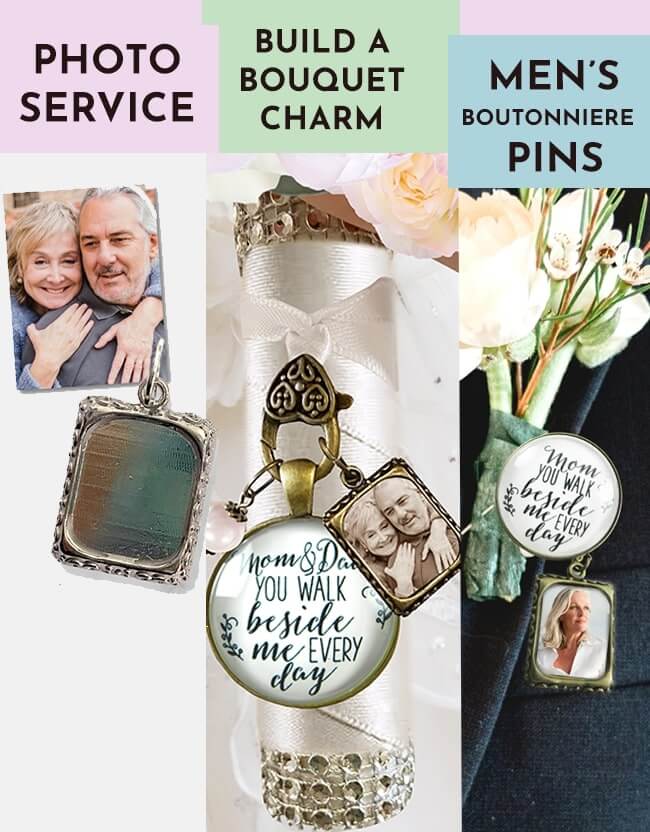
- a memorial bouquet charm with his photo
- a private letter written the night before
- wearing his watch, cufflink, or handkerchief
- a special song played quietly during getting ready
- a reserved note in your heart and nowhere else
- a mention in the program instead of a visual display
- a favorite meal, drink, or dessert that reminds you of him
- a quiet moment at his gravesite before the ceremony
Sometimes remembrance works best when it whispers.
Not when it shouts from row two.
Private tributes can be incredibly powerful because they belong to you.
Not the audience.
And honestly?
Sometimes “I thought of you today” is the most sacred tribute of all.
Private Remembrance vs Public Display
This is the real question.
Not:
Should I reserve the chair?
But:
Do I want remembrance to be visible… or quietly held?
There is no morally superior answer.
Some brides want everyone to witness that love.
Some want it to stay sacred and personal.
Some want both.
Some want none.
Chapter 1’s memorial “vibe check” in the book A Bride’s Guide to Wedding Day Memorials and Emotional Survival breaks this down beautifully—some people are visible honor-ers, some are tender observers, and some are private keepers.
You are not doing grief wrong.
You are choosing what fits your soul.
That is the assignment.
Ask Yourself Before You Decide
Before you order the sign, ask:
Will this comfort me…
or emotionally body-slam me at 4:17 PM?
Will I feel peace…
or pressure?
Am I choosing this because I want it…
or because I think I’m supposed to?
Would a private tribute feel more honest?
Would I still want this if no one on Pinterest had ever suggested it?
These questions matter.
Because sometimes the most loving thing you can do is not create the prettiest tribute.
It’s choosing the one that lets you breathe.

Final Truth: Your Dad Does Not Need Proof
This one matters.
Some brides feel guilty if they skip the reserved chair.
Like if they don’t make the tribute visible enough, it means they didn’t love enough.
Nope.
Absolutely not.
Love is not measured in centerpieces.
Or calligraphy signs.
Or strategically placed white roses.
Your father does not need proof.
He knew.
He knows.
Choosing privacy is not forgetting.
Choosing simplicity is not failure.
Choosing emotional self-preservation is wisdom.
Sometimes love looks like a reserved chair.
Sometimes it looks like a bouquet charm.
Sometimes it looks like taking one deep breath before walking down the aisle and whispering:
Dad, walk with me, okay?
That counts.
Actually, sometimes that matters most.
Not Every Tribute Needs to Be Public—Choose Peace, Not Performance
If you’re trying to decide how to honor your dad on your wedding day, start here:
Not with Pinterest.
Not with family pressure.
Not with what looks beautiful in photos.
Start with peace.
Choose the tribute that feels honest.
The one that lets you breathe.
The one that feels like love, not obligation.
Because remembrance is not a performance.
It’s a relationship.
And whether that looks like a reserved chair, a bouquet charm, or a private moment no one else sees—
it still counts.
Choose peace.
Always.

Lisa Copen writes for brides facing one of the hardest realities of wedding planning—walking down the aisle without their dad. As the author of A Bride’s Guide to Wedding Day Memorials and Emotional Survival and founder of Build a Bouquet Charm, she creates resources, keepsakes, and tools that help brides feel connected to their father’s presence, even in his absence. Get our free Bride's Wedding Memorial and Support Toolkit.